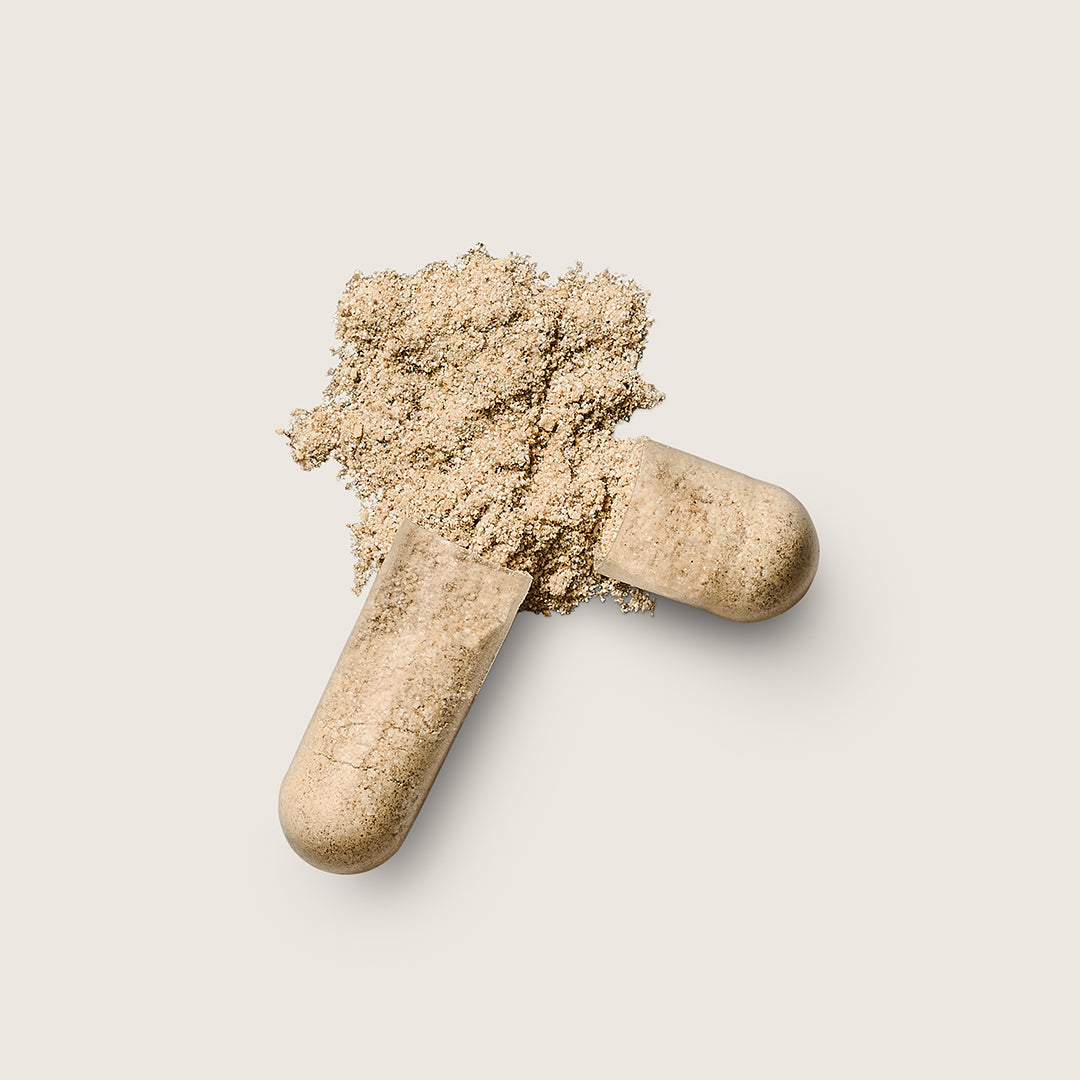
How MenoFriend® works

Formulated by hormone health and nutritionists, MenoFriend® is the award-winning, best-selling formula of botanicals, phytoestrogens and minerals for energy, clearer thinking and mental performance through menopause. 

Quick read

How diet can help?

Diet really can help support your client through menopause, helping balance hormones . 40% of women in our survey who made changes to their diet said doing so helped. Our hormone health expert Dr Katie Hodgkinson shares four great tips; 'Nutrition for menopause'.

How to take it?

  1. Take 2 capsules each day

    Take two capsules daily, morning or evening, with or without food.

  2. Take consistently

    Plant compounds reach a steady level in the body only with daily intake. Take MenoFriend® every day for at least 60 days, and expect it to keep improving after that.

  3. Adjust when needed

    Both capsules can be taken together or split across the day, whichever your client will remember.

Important — read before taking

Not suitable for clients who have had, or are at risk of, oestrogen-positive breast cancer, who are taking anticoagulants or blood thinning medication, or who are taking the combined contraceptive pill. Your client should consult their GP or healthcare provider if they are taking tamoxifen, an aromatase inhibitor or any other prescribed medication, if they have a thyroid condition, or if they are pregnant or breastfeeding.

What to expect?

1 month

Improved energy, concentration, focus and memory.

2 Months

Feel the difference in hormone regulation, mood, hair, skin and nails

3 Months

Supports mobility, muscles, joints and daily mental performance.

Ingredients

Ingredient
Why it's included
What the research says
Wild Yam
Comfortable menopause
A mainstay for menopause for generations for its plant steroid diosgenin.1–4
Dandelion Root
Digestion and fluid balance
Supports digestion and the flow of bile as the gut changes during menopause.
Mung Bean
Phytoestrogens
A natural source of isoflavones.5, 6
Sage Leaf Extract
Sweating and night sweats
Sage's oldest use is for sweating. In a study of 71 women, hot flushes became steadily less frequent over eight weeks.7–9
Dong Quai Root
Urogenital and women's health
Known as female ginseng, used as a women's tonic in Chinese herbal practice for over a thousand years.10–12
Hops Extract
Phytoestrogens and restless nights
Hops contain 8-prenylnaringenin, an oestrogen-like plant compound and traditionally turned to for restless nights.13–15
Red Clover Extract
Hot flushes and night sweats
The most researched plant in menopause. Pooled results from 12 trials found women taking red clover isoflavones had fewer hot flushes.16–20
Kelp
Iodine source
A natural marine source of iodine, which your thyroid needs to make the hormones that set your energy levels.21
Maca Root Extract
Energy and stamina
Trials in postmenopausal women report improvements in mood and sexual wellbeing.22–26
Magnesium
Tiredness
Helps ease tiredness, and supports muscles and mood.21, 27, 28
Calcium
Muscles and bones
The mineral bone is built from. Bone loss accelerates sharply once oestrogen falls away.21, 29–31
Selenium
Hair, nails and thyroid
Supports healthier hair and nails, and a normal functioning thyroid.21
Vitamin B12
Energy and brain fog
Fuels energy production and supports better mood and mental clarity.21
Vitamin B6
Hormone regulation
Involved in regulating hormonal activity when it's in flux.21
Vitamin B2
Skin and cell protection
Looks after your skin and helps protect cells from everyday oxidative stress.21
Vitamin B3 (Niacin)
Energy, skin and brain fog
Works across three fronts at once — energy, skin, and psychological function.21
Vitamin B5
Focus and energy
Supports mental performance, and helps your body make its own neurotransmitters.21
Vitamin K2 (MK-7)
Bone maintenance
Activates the proteins that bind calcium into bone.21
Vitamin D3
Bones and immunity
Needed for your body to absorb calcium and supports healthy immunity.21, 32, 33
Wild Yam
Why it's included Comfortable menopause
What the research says A mainstay for menopause for generations for its plant steroid diosgenin.1–4
Dandelion Root
Why it's included Digestion and fluid balance
What the research says Supports digestion and the flow of bile as the gut changes during menopause.
Mung Bean
Why it's included Phytoestrogens
What the research says A natural source of isoflavones.5, 6
Sage Leaf Extract
Why it's included Sweating and night sweats
What the research says Sage's oldest use is for sweating. In a study of 71 women, hot flushes became steadily less frequent over eight weeks.7–9
Dong Quai Root
Why it's included Urogenital and women's health
What the research says Known as female ginseng, used as a women's tonic in Chinese herbal practice for over a thousand years.10–12
Hops Extract
Why it's included Phytoestrogens and restless nights
What the research says Hops contain 8-prenylnaringenin, an oestrogen-like plant compound and traditionally turned to for restless nights.13–15
Red Clover Extract
Why it's included Hot flushes and night sweats
What the research says The most researched plant in menopause. Pooled results from 12 trials found women taking red clover isoflavones had fewer hot flushes.16–20
Kelp
Why it's included Iodine source
What the research says A natural marine source of iodine, which your thyroid needs to make the hormones that set your energy levels.21
Maca Root Extract
Why it's included Energy and stamina
What the research says Trials in postmenopausal women report improvements in mood and sexual wellbeing.22–26
Magnesium
Why it's included Tiredness
What the research says Helps ease tiredness, and supports muscles and mood.21, 27, 28
Calcium
Why it's included Muscles and bones
What the research says The mineral bone is built from. Bone loss accelerates sharply once oestrogen falls away.21, 29–31
Selenium
Why it's included Hair, nails and thyroid
What the research says Supports healthier hair and nails, and a normal functioning thyroid.21
Vitamin B12
Why it's included Energy and brain fog
What the research says Fuels energy production and supports better mood and mental clarity.21
Vitamin B6
Why it's included Hormone regulation
What the research says Involved in regulating hormonal activity when it's in flux.21
Vitamin B2
Why it's included Skin and cell protection
What the research says Looks after your skin and helps protect cells from everyday oxidative stress.21
Vitamin B3 (Niacin)
Why it's included Energy, skin and brain fog
What the research says Works across three fronts at once — energy, skin, and psychological function.21
Vitamin B5
Why it's included Focus and energy
What the research says Supports mental performance, and helps your body make its own neurotransmitters.21
Vitamin K2 (MK-7)
Why it's included Bone maintenance
What the research says Activates the proteins that bind calcium into bone.21
Vitamin D3
Why it's included Bones and immunity
What the research says Needed for your body to absorb calcium and supports healthy immunity.21, 32, 33

How it works?

MenoFriend® is a formula of 19 active ingredients, with non-soy phytoestrogens from six botanicals alongside vitamins and minerals required more during menopause, for brain fog, mood, hot flushes, night sweats, energy, bones, hair and nails.

In our study of 978 women, 89% of those taking MenoFriend® for three months or more found it effective. The most relieved symptoms were hot flushes and night sweats, anxiety and mood swings, and brain fog.

Hot flushes and night sweats

The body regulates its temperature within a narrow comfortable range, and falling oestrogen narrows that range further, so a small rise can trigger a bigger response: flushing, sweating, and a racing heart.

Red clover is the most researched plant in menopause and the lead botanical in MenoFriend®. Pooled results from 12 trials found women taking red clover isoflavones had fewer hot flushes. Sage's oldest recorded use is for sweating specifically, and in one study of 71 women, hot flushes became steadily less frequent across eight weeks.

Hot flushes and night sweats were the single most relieved symptom in our study, reported by more than half of women taking MenoFriend® for three months or more.

What phytoestrogens actually do

Phytoestrogens are plant compounds shaped closely enough to oestrogen to interact with the same receptors in the body, though far more gently.

Phytoestrogens bind preferentially to beta receptors, which are concentrated in bone, blood vessels and the brain rather than in breast and womb tissue. This selectivity is why their effect is subtle rather than systemic, and it is the mechanism behind most of what MenoFriend® does.

MenoFriend® draws its phytoestrogens from six botanicals rather than one, and none of them is soy: red clover, hops, wild yam, dong quai, mung bean and maca. Hops contain 8-prenylnaringenin, the most oestrogen-like plant compound yet identified.

Mood, anxiety and feeling like themselves

The mood changes of menopause are not imagined. Oestrogen influences serotonin and GABA, two of the systems that regulate how steady your client feels, so when oestrogen falls, mood follows.

Vitamins B6, B3, B5 and B12 all help combat low moods and are directly involved in making the neurotransmitters that carry signals between brain cells. Magnesium supports the nervous system, and levels fall under sustained stress, which makes it one of the more useful things to replace during a demanding stretch of life.

If your client needs additional magnesium support, we recommend our Magnesium Glycinate, 300mg.

Brain fog and mental clarity

Brain fog is the symptom women find hardest to explain and most unsettling to live with. Losing a word mid-sentence, walking into a room without knowing why, reading the same paragraph three times.

The reason for it is oestrogen receptors sit throughout the brain, particularly in the hippocampus, which handles memory and word-finding, so when oestrogen falls, the recall that depends on it falls too. Vitamin B12 and vitamin B6 support psychological function and vitamin B5 supports mental sharpness and focus.

Energy, tiredness and the thyroid

Broken sleep, fluctuating hormones and the cognitive load of managing flagging energy and tiredness can both lead to feelings of exhaustion.

Vitamin B12, vitamin B6, vitamin B2, vitamin B3 and magnesium all fuel the process that converts what your client eats into usable energy, and maca is included alongside them: grown at 4,000 metres in the Peruvian Andes and used there for stamina for centuries, with trials in postmenopausal women reporting improvements in mood and sexual wellbeing.

Thyroid problems become more common in midlife and share several symptoms with menopause, so the two are easily mistaken for each other. Selenium and the iodine from kelp in MenoFriend® both support a healthy thyroid function.

Bones

As oestrogen falls away, bone is broken down faster than it is rebuilt, and the sharpest losses happen in the years around the final period, which makes this the window that matters most rather than the decade after it.

Vitamin D3 is essential for the body to absorb calcium in the first place. Vitamin K2 then activates the proteins that bind that calcium into bone. The two work in sequence, which is why they are included together alongside calcium and magnesium: absorbing calcium without directing it where it needs to go achieves less than it should.

If bone density is your client's priority, we recommend OsteoFriend® alongside MenoFriend®.

Hair, skin and nails

Collagen production falls with oestrogen, and the drop is steeper than most expect. Thinning hair and brittle nails usually follow, and they are among the changes MenoFriend® addresses.

Selenium supports healthier hair and nails, vitamin B2 fuels healthy skin, and vitamin B3 works across skin and energy at once. Dandelion root is included to support digestion and the flow of nutrients across the body.

For focused hair support, we recommend Hair Saviour® alongside MenoFriend®.

Why it keeps getting better

MenoFriend® rewards patience, and our own data shows it clearly. Effectiveness rose from 64% among women taking it for under two months, to 83% at three to six months, 90% at seven to twelve, and 96% at one to two years.

Broadly, energy and mental performance come first at around a month, hormone regulation, mood, hair and nails at two, and bones, muscles and immunity at three.

The evidence behind DRV+

Women's Health

A non-hormonal menopause option with a clear duration-response

MenoFriend® is a non-hormonal nutritional supplement for the menopausal transition. This individual-level analysis reports effectiveness, symptom relief and a direct comparison with HRT in the same population.

978 respondents (735 established users) January 2024 Cross-sectional customer survey
89% established users rate it effective
83% all users rate it effective
69% HRT comparator
Study Findings

Individual-level cross-tabulation of 978 MenoFriend® users (735 established, 2+ months), with HRT (n=574) as a same-population comparator.

The results?

82.6% of all users and 88.7% of established users rated MenoFriend® effective, versus 68.5% for HRT, with a far lower dissatisfaction rate (17.4% vs 31.5%). A clear duration-response was seen (64.2% at under two months rising to 95.8% at 1-2 years). MenoFriend® outperformed HRT specifically for brain fog (35.0% vs 26.8%).

What This Means

Favourable vs HRT in this population

88.7% (established) vs 68.5% for HRT; nearly half the dissatisfaction rate.

Note: ~25% of users also used HRT concurrently.

Clear duration-response

Combined-positive rose from 64.2% to 95.8% across duration bands.

Adequate exposure (3+ months) is key to assessing benefit.

Distinct cognitive edge

Brain-fog relief 35.0% vs 26.8% for HRT.

Alongside hot flushes/night sweats (44.8%) and mood (42.4%).

Women's Health

How menopause reshapes gut health

Our survey of 1,526 women shows that gut health deteriorates for most women during menopause - usually beginning in perimenopause.

1,526 respondents January 2024 Cross-sectional customer survey
67% report worse gut health
73% experience bloating
79% feel a psychosocial impact
Study Findings

We surveyed 1,526 women across the menopausal transition on gut symptoms, their timing, frequency and downstream impact.

What we found:

66.8% reported noticeably worse gut health since menopausal symptoms began - typically starting in peri-menopause (58%). Bloating led (73%), experienced daily or near-daily by 77% of those affected. 79% reported a psychosocial consequence. Among gut-targeted supplements assessed, Gut Works® rated strongest (78.4% positive).

What This Means

It starts earlier than expected

58% first noticed gut changes in peri-menopause.

Often before menopause is formally established.

Persistent, not occasional

77% of bloating sufferers experience it daily or near-daily.

With a mean of 3.4 gut symptoms per woman affected.

Diet alone isn't enough

Only 11% found dietary change 'very effective'; Gut Works® led supplements at 78.4%.

Targeted support outperformed diet for most women

References

The questions people
actually have!

Can my client take the MenoFriend® menopause supplement with HRT?

MenoFriend® supports a more comfortable menopause and is often taken alongside HRT, however we always recommend that your client consults their GP or healthcare practitioner before taking supplements if they're on HRT or medication.

We provide high-quality dietary supplements and foods. We cannot give medical advice. We would advise anyone to seek guidance from their GP or healthcare practitioner if there are any concerns using supplements when on HRT.

Can my client take MenoFriend® with the combined pill?

We do not recommend taking MenoFriend® with the combined pill due to interactions between the ingredients in MenoFriend® that may affect the contraceptive pill.

Can my client take MenoFriend® with the mini pill?

MenoFriend® is often taken alongside the mini pill (progesterone only). There are a few minor drug-nutrient interactions with this combination, so we recommend taking MenoFriend® and the mini pill at opposite times of the day. We always recommend that your client consults their GP or healthcare practitioner before taking supplements if they're on medication, including the mini pill.

What is the best menopause supplement?

According to BBC Good Food guide to best menopause supplements, published in November 2025, MenoFriend is ranked as the Star Buy and 'Best Menopause Supplement'. With a star rating of 5/5, BBC Good Food says "Only two capsules a day deliver an impressive blend of nutrients in this vegan, allergen-free menopause formula. The eco-friendly pouch opens and reseals easily, and although the capsules carry a mild turmeric scent, there’s no taste when taken. Inside is a thoughtful mix of B12, D3, K2 and botanicals such as red clover and sage. Free from additives and easy to take, it’s a dependable daily option for menopause support."

WHAT IS THE DIFFERENCE BETWEEN PERIMENOFRIEND® AND MENOFRIEND®?

PeriMenoFriend® is formulated for women going through perimenopause, which can begin 4-10 years before menopause. It is very normal to still have periods, even if they are irregular, through perimenopause. The signs of perimenopause are very similar to those experienced during menopause.

PeriMenoFriend® helps support the heightened feelings during perimenopause. MenoFriend® has been used by over 50,000 women and can also be taken through postmenopause.

HOW DO I KNOW IF MY CLIENT SHOULD TAKE PERIMENOFRIEND® OR MENOFRIEND®?

It is important to understand women that are of menopausal age are healthy adults. As such we provide nutritional products to support good health alongside a balanced diet. Our products can be taken at any age but the dietary challenges when we are older can become more important for some.

Perimenopause is the first stage of menopause that can begin 4-10 years before menopause. Menopause is when a woman has gone for a full 12 months without a menstrual cycle, so if your client is still having periods, even if irregular, they are in perimenopause. PeriMenoFriend® is formulated to support the health and wellbeing of women during perimenopause. Learn more in "How do I know if I'm starting menopause".

Can my client take MenoFriend® if they've had a hysterectomy?

MenoFriend®️ may be suitable for signs of menopause after a hysterectomy. A full hysterectomy often causes a person to go into surgical menopause immediately when the ovaries have been removed. It is also possible for one or both ovaries to be left intact after a hysterectomy. Ovaries are responsible for producing oestrogen and progesterone. If your client still retains their ovaries, they will experience menopause as normal.

How long does it take for MenoFriend® to work?

The time it takes to feel a difference from taking any supplements varies by individual due to many factors including the stage of menopause, age, weight, diet and the foods your client eats, lifestyle, exercise and other factors.

How long can my client take MenoFriend® for?

MenoFriend® is formulated so your client can thrive through menopause and postmenopause. MenoFriend® is safe to take for as long as necessary and it is helping them thrive. We always advise that if your client doesn't feel they need to take supplements, that is a good thing, so it can be a good idea to stop taking supplements if they don't feel they need them and if they feel they've achieved their health goal.

When is the best time to take menopause supplements like MenoFriend®?

Menopause supplements can be taken at any time of the day. The most common time to take MenoFriend® is in the evenings. However, your client can take their two MenoFriend® capsules together or separately, in the mornings, daytime or evening. It is a case of learning and adapting to what works best for them and their body.

To enjoy the benefits of MenoFriend®, it's important to take two capsules consistently each day.

Are menopause supplements safe?

Most menopause supplements are safe when taken as directed and chosen carefully. We always recommend looking for products that are made with high-quality ingredients and free from unnecessary additives. Safety also depends on your client's individual health, so it’s best to review their supplements with a healthcare professional, especially if they’re on other medications or have underlying conditions.

Can menopause supplements cause weight gain?

Generally, menopause supplements do not directly cause weight gain. Hormonal changes during this life stage can make weight management more challenging, but most quality supplements are designed to support balance, not add extra calories. If anything, the right nutrients may help maintain a healthy metabolism, support energy and reduce signs of menopause that make it harder to stay active.

When should my client start taking menopause supplements?

Your client can start menopause supplements at any stage, whether they’re in perimenopause (when symptoms first appear) or postmenopause - if the supplements are appropriate for their needs. The 'right' time is when they start noticing changes to their body and mood. A tailored approach based on their signs and nutritional gaps works best.

Is wild yam good for menopause?

Wild yam is acclaimed for helping maintain calm and comfort through menopause.

Is dong quai good for menopause?

Dong Quai has been extensively studied for helping regulate hormones.

How does red clover help with menopause?

Red clover provides Isoflavones and is widely studied for its role in supporting cardiovascular health.

Does maca root help with menopause?

Maca, a hardy plant from South America, is a popular botanical studied for supporting physical and mental wellbeing, stamina, and feelings of vitality.

Can my client take MenoFriend® with coils?

MenoFriend® is ok to be used alongside both the copper coils and the Mirena coil. The progesterone in the Mirena coil is metabolised through a different pathway to oral progesterone.