


Practitioner paper
Fibre Practitioner Paper
Everything you need to know about fibre.

What are you looking for?
Recent searches
Quick Action
Recommended Products
MEN'S HEALTH
 Ashwagandha KSM-66®
 Bone & Muscle Support
 Brain Fuel®
 Choline
 Creatine & BCAAs
 Curcumin & Turmeric
 Daily Multivitamin
 Debloat & Detox
 Fibre Complex
 GastroAid®
 Gentle Iron & Vitamin C
 GlucoBalance®
 Gut Works®
 Hair Saviour®
 HeartPro®
 Hydrate+ Lemon
 Hydrate+ Mixed Berry
 Hydrate+ Orange & Pineapple
 Kid's ProMulti
 Magnesium Citrate
 Magnesium Glycinate
 Men's ProMulti
 MenoFriend®
 OsteoFriend®
 PeriMenoFriend®
 pH Hero®
 PMS Hero®
 Pregnancy Multinutrient
 Protein & Creatine Superblend
 Saffron Safr’Inside™
 Screen Eyes
 Skin Saviour®
 Stay Calm®
 UltraEnergy
 Vegan Nights®
 Vegan Omega 3
 Vitamin B12
 Vitamin D3 & K2
 Weight Management Support
 Women's ProMulti


Saffron is a flower that enhances the level of serotonin in the brain.
Learn more
Dietary fibre is classified into two main categories based on its solubility in water.
Fermentable fibre
Fermentable fibre
Broken down by colonic bacteria, producing short-chain fatty acids (SCFAs) like acetate, propionate, and butyrate. Found in foods that contain inulin, pectins, and resistant starch such as chicory, garlic, onions, leeks, asparagus, green bananas and artichokes.
Non-fermentable fibre
Non-fermentable fibre
Non-Fermentable (or Insoluble) Fibre remains largely unchanged as it passes through the colon.
Contributes to stool bulk, helping to promote regular bowel movements.
Found in foods such as whole grains, bran, and certain vegetables.
Functional fibre
Functional fibre
Isolated fibres with demonstrated health benefits, such as beta-glucans and psyllium.
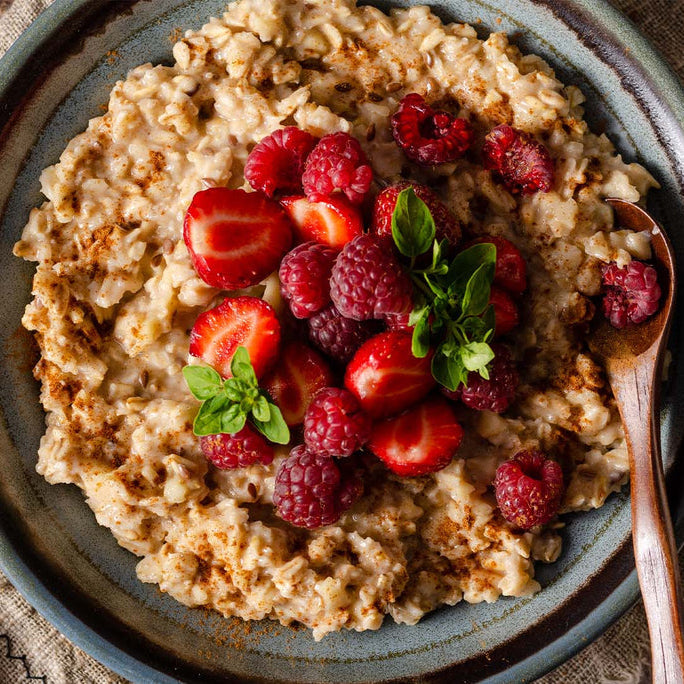
Promotes regular bowel movements and prevents constipation.<sup>1</sup> Insoluble fibre absorbs water, increasing stool bulk and decreasing transit time, which reduces the risk of constipation and associated disorders.
Associated with a reduced risk of colorectal cancer due to SCFAs like butyrate, which have anti-inflammatory and anti-carcinogenic properties.<sup>10</sup>
SCFAs strengthen the gut barrier and modulate immune responses, reducing systemic inflammation.<sup>11</sup> Fermentable fibres stimulate the growth of beneficial bacteria such as Bifidobacteria and Lactobacilli. SCFAs produced during fermentation lower colonic pH, inhibiting pathogenic bacteria.
An estimated 90% of adults fall short on fibre. When the gut doesn't have enough fibre, the microbiome starves.
Fibre Complex combines psyllium husk (the seed coat, rich in mucilage that supports intestinal transit) with fibre from apple (pectins, a soluble fibre), carrot and beetroot (roots, for insoluble fibre), and blueberry (rich in polyphenols including anthocyanins).

5 types of soluble and insoluble fibre led by psyllium husk. For intestinal health and a thriving gut microbiome.
Practitioner papers, supplement considerations and client handouts to read online or download as PDF.
Everything you need to know about fibre.
A comprehensive guide to gut health, pre & probiotics.
A comprehensive guide to digestion and liver health.
Guide for gastrointestinal and digestive disorders.
Supplement, diet, lifestyle and testing considerations.
Diet and lifestyle recommendations.
Diet and lifestyle recommendations.
Diet and lifestyle recommendations.
Diet and lifestyle recommendations.


